Tadalafil
Tadalafil is a selective phosphodiesterase (PDE) type 5 inhibitor similar to sildenafil and vardenafil. It is administered orally for the treatment of male erectile dysfunction (ED), pulmonary arterial hypertension (PAH), benign prostatic hypertrophy (BPH), or the concurrent treatment of erectile dysfunction and BPH. Tadalafil does not inhibit prostaglandins as do some agents for treating impotence (e.g., alprostadil). Unlike sildenafil, visual disturbances have not been reported with tadalafil, which is more selective for PDE5 than for PDE6 present in the retina. The duration of action of tadalafil for the treatment of ED (up to 36 hours) appears to be longer than that of sildenafil and vardenafil. Because PDE inhibitors promote erection only in the presence of sexual stimulation, the longer duration of action of tadalafil allows for more spontaneity in sexual activity. According to ED treatment guidelines, oral phosphodiesterase type 5 inhibitors (PDE5 inhibitor) e considered first-line therapy.1 Tadalafil was in phase II trials for the treatment of female sexual dysfunction, however, further investigation was discontinued. FDA approval was granted November 2003 for the treatment of male erectile dysfunction (ED), and in January 2008, approval was granted for once-daily use without regard to timing of sexual activity. Tadalafil (Adcirca) was FDA approved for the treatment of pulmonary arterial hypertension (PAH) in May 2009. In clinical studies of patients with pulmonary arterial hypertension (PAH), tadalafil-treated patients experienced improved exercise capacity and less clinical worsening compared to placebo. In October 2011, tadalafil received FDA approval for the treatment of the signs and symptoms of benign prostatic hyperplasia (BPH) and for the concurrent treatment of erectile dysfunction and BPH.
Dextromethorphan HBr
Dextromethorphan is an oral, non-opioid, non-prescription drug used as an antitussive. Although it is related to the opiate agonists (dextromethorphan is the methyl ether of the d-isomer of the codeine analog levorphanol), dextromethorphan does not exhibit typical opiate agonist characteristics. The only morphine-like characteristic dextromethorphan retains is its antitussive property. Dextromethorphan is a commonly used ingredient in many cough and cold preparations, and the drug is useful in treating chronic, nonproductive cough, but it has no expectorant activity. When ingested at recommended dosage levels for intended purposes, dextromethorphan is generally regarded as a safe and effective cough suppressant, particularly for patients with cough due to chronic bronchitis or COPD; the evidence for the drug’s utility for suppressing cough due to upper respiratory infection (URI) is less robust.2
Dextromethorphan has been identified as an antagonist to N-methyl-D-aspartate (NMDA) receptors. Dextromethorphan has been studied in the treatment of pain including cancer pain, postoperative pain, and neuropathic pain with mixed results and, in some cases, intolerable side effects. The FDA originally approved dextromethorphan in 1954. On May 20, 2005, the FDA made a public announcement regarding dextromethorphan (DXM) and new trends in the abuse of this drug. The ingestion of pure dextromethorphan in powdered form and in excessive dose can cause death as well as other serious adverse events such as brain damage, seizure, loss of consciousness, and irregular heart beat. Although the reported abuse of dextromethorphan is not new, dextromethorphan is increasingly offered for sale in pure powdered form from questionable sources (e.g., unsanctioned pharmacy websites) and street dealers, and health care professionals should be alert to these new trends.
Tramadol HCl
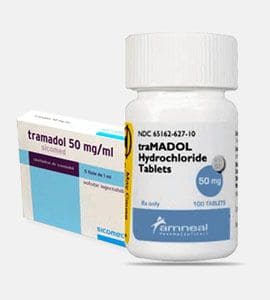
Tramadol is an oral opioid agonist indicated for the treatment of pain severe enough to require an opioid analgesic and for which alternate treatments are inadequate. In addition to binding to mu-opioid receptors, tramadol is a norepinephrine and serotonin reuptake inhibitor. The analgesic effect of tramadol is believed to be due to both binding mu-opioid receptors and weak inhibition of reuptake of norepinephrine and serotonin. Tramadol demonstrated comparable efficacy to acetaminophen with codeine, aspirin with codeine, and acetaminophen with oxycodone when studied in 3 long-term controlled trials in patients with a variety of chronic painful conditions.3 Tramadol is conditionally recommended for treatment of osteoarthritis of the hand, knee, or hip in patients who may have contraindications to NSAIDs, find other therapies ineffective, or have no available surgical options.
Seizures have been reported in patients receiving tramadol within the recommended dosage range; seizure risk is increased with doses of tramadol above the recommended range. Risk of seizure may also increase in patients with a seizure disorder, history of seizures, recognized risk for seizure, or concomitant use of other drugs that reduce the seizure threshold. In tramadol overdose, naloxone administration may increase the risk of seizure. Suicidal tendency possibly causally related to tramadol has been reported. Do not prescribe tramadol for patients who have suicidal ideation or are addiction-prone; consider use of non-narcotic analgesics in patients who are suicidal or depressed.
The safety and efficacy of tramadol in pediatric patients has not been established. Tramadol is contraindicated in children younger than 12 years and for postoperative pain management in pediatric patients younger than 18 years after a tonsillectomy and/or adenoidectomy.35 Ultra-rapid metabolizers of CYP2D6 substrates may convert tramadol to its active metabolite, O-desmethyltramadol, more quickly and completely than usual, leading to higher than normal opioid blood concentrations that can result in fatal respiratory failure. Because some children who are normal metabolizers can covert opioids at similar rates to ultra-rapid metabolizers, this concern extends to all pediatric patients.

















 FedEx Courier delivery

Reviews
Clear filtersThere are no reviews yet.